Luxury Outdoor Furniture Guide: Weather-Resistant Materials Perfect for Florida’s Climate
Outdoor living is essential to the Tampa Bay lifestyle. Year-round sunshine and mild winters mean patios, lanais, and poolside areas are true home extensions. However, this appealing climate also severely challenges outdoor furniture. Relentless UV exposure, persistent humidity, heavy seasonal rain, and tropical storms mean standard outdoor furniture simply won’t last in Florida.
Selecting outdoor furniture for a Tampa Bay home requires focusing on materials, construction, and fabrics for long-term durability, not just aesthetics. This guide covers how to choose luxury outdoor furniture that withstands Florida’s harsh conditions, from weather-resistant materials and performance fabrics to design trends.
Whether you are furnishing a sun-drenched patio, a screened lanai, or a full outdoor dining area, the information here will help you invest wisely. For a broader look at luxury furniture options across every room in your home, the Luxury Furniture Shopping Guide for Tampa Bay covers bedroom, living room, dining, and more from the same perspective of quality and longevity.
Why Florida’s Climate Demands Specialized Outdoor Furniture: Understanding the Elements
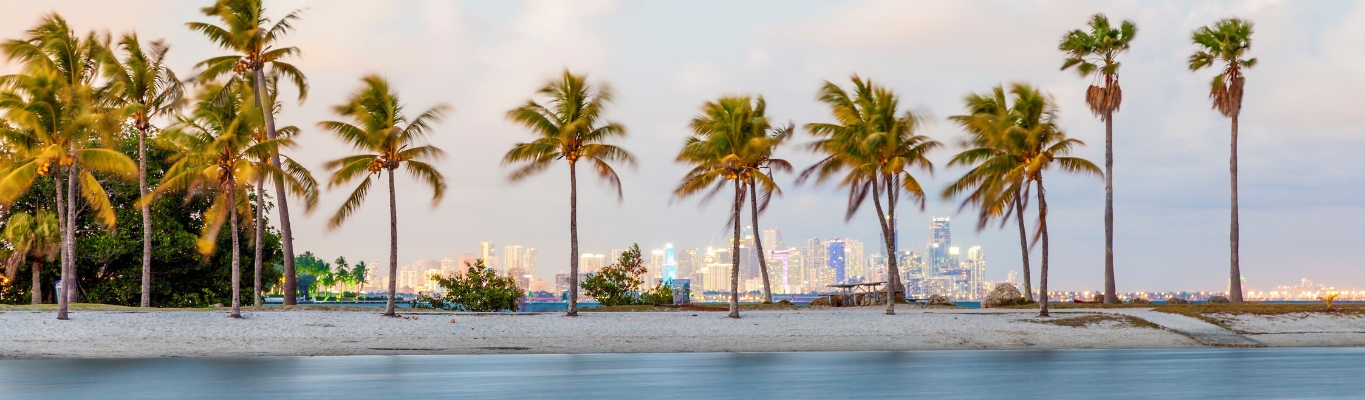
Tampa Bay’s outdoor living season does not follow the same rules as the rest of the country. While homeowners in northern states pack away their patio furniture by October, Tampa Bay, Pinellas Park, Ft. Myers, Sarasota, Naples and Tarpon Spring residents use their outdoor spaces nearly year-round. That extended exposure is exactly what makes material selection so critical. The combination of heat, humidity, UV radiation, and rainfall can break down standard outdoor furniture in a matter of months.
Tampa receives an average of 246 days of sunshine per year, with summer UV index values regularly reaching 9-11+ in summer months. That level of ultraviolet exposure does not just fade cushion fabric; it can also cause it to break down. It degrades plastic components, weakens adhesives, and causes untreated wood to crack and splinter. Florida ranks among the top three states in the U.S. for annual average UV index, alongside Hawaii and Arizona.
Humidity compounds the problem. Tampa Bay’s average relative humidity hovers around 74% annually, peaking near 78% in August. That persistent moisture creates ideal conditions for mold and mildew growth on untreated surfaces and accelerates corrosion on metals not specifically engineered for coastal or subtropical environments. Standard wrought iron or untreated steel furniture can show visible rust within weeks of being placed outdoors in Tampa.
Then there is the rain. According to NOAA 1991-2020 Climate Normals, Tampa Bay and the surrounding areas receive approximately 49.6 inches of precipitation annually, with nearly two-thirds falling in the months of June through September. The warm season brings an almost daily chance of rain and thunderstorms, especially in the afternoon, and these are not gentle drizzles. The Tampa Bay area is sometimes referred to as the “Lightning Capital of North America” due to the frequency and intensity of its summer storms. Furniture left uncovered during these downpours absorbs significant water, and if cushion cores and frame materials are not designed to shed moisture quickly, the cycle of soaking and drying promotes warping, swelling, and structural decay.
Hurricane season adds another layer of concern. Florida’s hurricane season runs from June through November, and the threat of tropical storms means outdoor furniture either needs to be heavy and stable enough to withstand high winds or light enough to be brought indoors on short notice. Weather-resistant design is not a luxury in Florida. It is a baseline requirement.
How Does Tampa Bay’s Climate Affect Outdoor Furniture Lifespan?
Tampa Bay averages approximately 49.6 inches of annual rainfall based on NOAA 1991-2020 Climate Normals, and an average relative humidity of 74%. These conditions create a simultaneous triple threat of UV degradation, moisture damage, and metal corrosion that standard outdoor furniture materials are not engineered to withstand.
The gap between standard and climate-appropriate materials is significant. As outlined throughout this guide, untreated steel or basic plastic patio furniture may last only 2 to 4 years under these conditions, while premium weather-resistant materials like powder-coated aluminum (10 to 15 years), resin wicker (15 to 20+ years), and teak (25 to 50 years) are specifically built to handle sustained subtropical exposure. For Tampa Bay homeowners, choosing outdoor furniture designed for high-UV, high-humidity environments turns a short replacement cycle into a multi-decade investment.
Key Takeaway: Tampa Bay’s combination of 246 sunny days, nearly 50 inches of annual rain, and 74% average humidity demands purpose-built outdoor furniture materials, and the lifespan difference between standard and subtropical-ready options can be measured in decades, not years.
Top Weather-Resistant Materials for Tampa Bay: Aluminum, Teak, Wicker & More
Not all outdoor furniture materials perform equally in Florida’s climate. The best options share a few key traits: resistance to moisture and corrosion, UV stability, and low maintenance requirements. Four materials consistently rise to the top for Florida homeowners, each with distinct advantages depending on the application and design preference.
Powder-Coated Aluminum
Aluminum is the most practical material for outdoor furniture in Florida. It’s naturally rust-resistant, lightweight, and durable. Modern aluminum furniture features powder-coated finishes that electrostatically bond to the surface and are heat-cured, offering superior, more durable protection against oxidation, scratches, and UV fading than standard paint.
Aluminum’s light weight is a trade-off; pieces can shift or topple in heavy winds or storms if unsecured. Coastal homeowners may need to anchor pieces or move them inside during severe weather. Nonetheless, its corrosion resistance, heat resistance (doesn’t retain heat like iron or steel), and low maintenance make it ideal for Tampa Bay patios and poolscapes.
Teak Wood
Teak has been the premium choice for outdoor furniture for generations. Its natural oils offer built-in protection against moisture, rot, insects, and fungal growth, making it valuable to shipbuilders. Well-maintained teak can last 25 to 50 years, making it one of the most durable natural wood options.
New teak is honey-gold and weathers to a popular silver-gray. Its original color can be maintained with periodic oil/sealant, or allowed to age naturally without sacrificing strength. Teak’s weight is advantageous in storms, as it provides stability. Though it has a higher initial cost, its longevity makes it a better long-term investment.
Resin Wicker (HDPE)
Resin wicker, usually HDPE, mimics the classic woven look of natural wicker or rattan but resists moisture. Unlike natural wicker, which absorbs water, swells, warps, and molds in humid climates, synthetic resin wicker is UV-stabilized against fading and cracking. High-quality resin wicker is typically woven over durable, powder-coated aluminum frames.
HDPE resin wicker is a sustainable choice, often made from recycled materials and recyclable as a finished product. Its variety of colors and weaves makes it suitable for coastal, contemporary, and traditional designs. For Tampa Bay homeowners seeking a warm, textured look without the maintenance of natural fibers, it’s an excellent option.
Marine-Grade Stainless Steel
For accent pieces, hardware, and certain structural components, marine-grade stainless steel offers the highest level of corrosion resistance. The designation “marine-grade” typically refers to 316-grade stainless steel, which contains molybdenum for added resistance to salt air and chloride environments. This makes it particularly relevant for homes near the coast or adjacent to saltwater pools. While full furniture frames in marine-grade steel are less common (and more expensive), the material is used frequently in table bases, fasteners, and structural connectors in premium outdoor collections.
Luxury Outdoor Sectionals and Seating: Comfort That Withstands Florida Weather
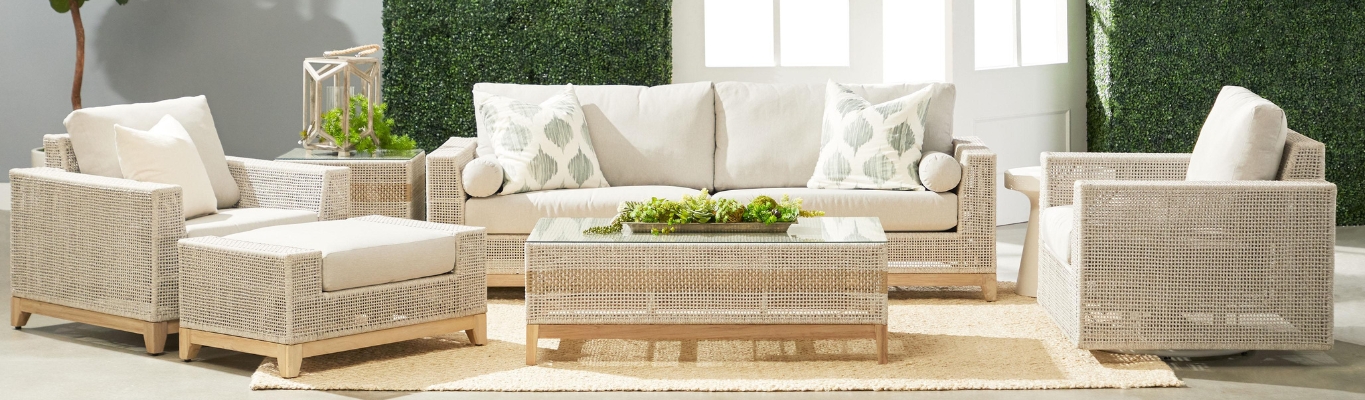
Outdoor seating has evolved well beyond the basic plastic chair. Today’s luxury outdoor sectionals and lounge pieces rival indoor furniture for comfort while being engineered to handle everything Florida’s climate delivers. The key is finding the right combination of frame material, cushion technology, and design flexibility.
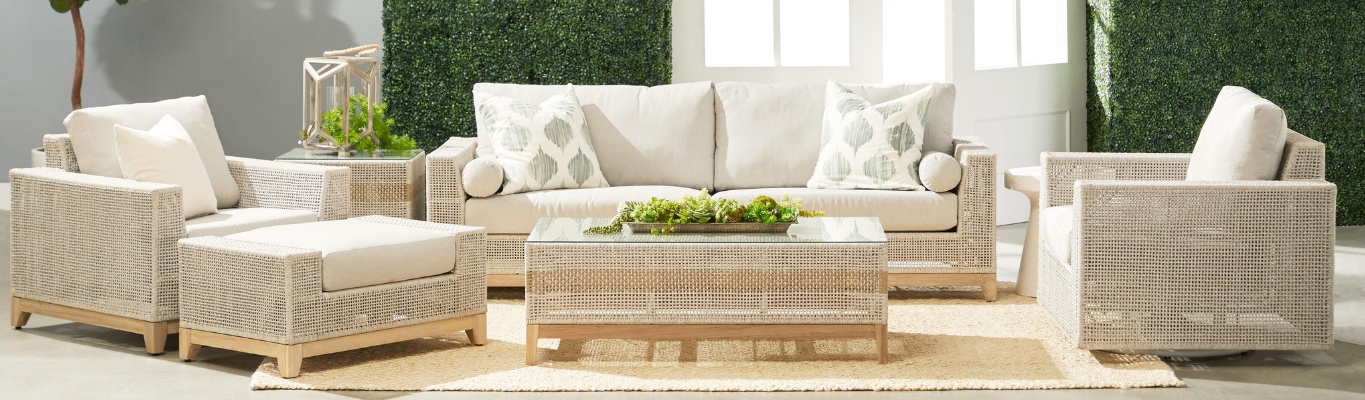
Woven rope and resin wicker sectionals have become especially popular for Florida lanais and covered patios. These pieces typically feature flat rope or wicker woven over powder-coated aluminum frames, creating a look that feels both modern and relaxed. Matter Brothers carries collections from brands like Essentials for Living, whose Woven and Tapestry outdoor lines use taupe and white flat rope paired with gray teak accents. The Tropez Outdoor Sofa, for example, combines a woven resin wicker frame with plush, quick-dry cushions designed specifically for Tampa Bay’s heat, humidity, and sudden summer showers.
When evaluating outdoor seating, pay close attention to cushion construction. Quick-dry foam cores are essential in Florida. Unlike traditional foam, quick-dry cushions allow water to pass through the material and drain rather than being absorbed. This means you can sit comfortably within 20 to 30 minutes after a rainstorm, rather than waiting hours for waterlogged cushions to dry. The foam itself is engineered to resist mold and mildew, which is critical given Tampa’s humidity levels.
Frame construction is equally important. Choose furniture with welded joints for better stability than bolted connections. Elevated or open-bottom bases are also recommended in humid areas, as they allow air circulation and reduce moisture buildup at ground level.
Modular configurations offer practical advantages for outdoor spaces in Florida. Sectionals that can be rearranged allow homeowners to adjust their layout seasonally, move pieces under cover during storms, or reconfigure seating for different gatherings. A Sunday brunch setup might look different from a weeknight family hangout, and modular furniture adapts to both without requiring entirely separate collections. You can browse Matter Brothers’ full range of outdoor seating and furniture options to see what is currently available across their Tampa Bay showrooms.
Outdoor Dining Furniture: Tables, Chairs, and Bar Sets for Year-Round Entertaining
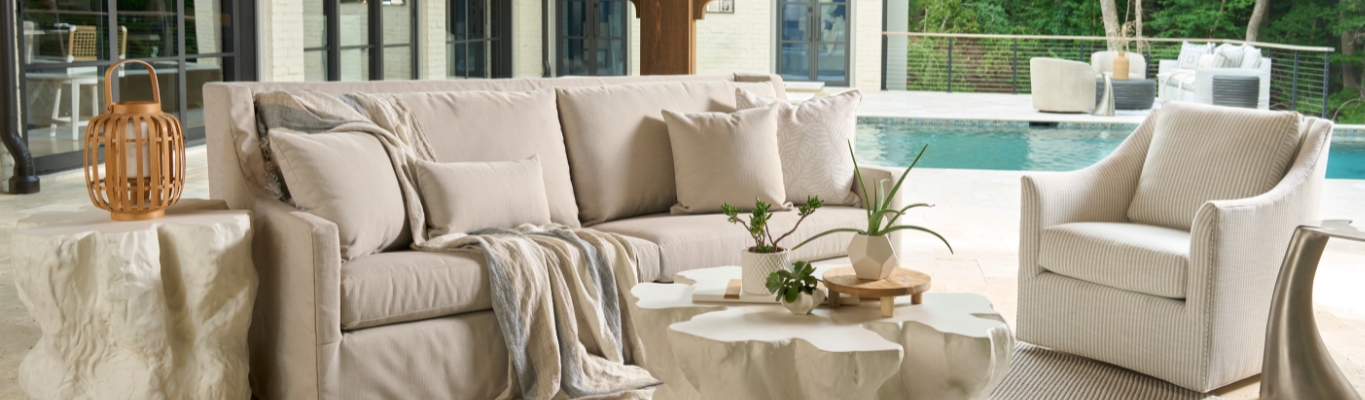
Tampa Bay’s year-round mild weather means outdoor dining is year-round, putting extra demands on patio furniture. The right dining table material is key. Powder-coated aluminum tables are durable, stylish, rust-resistant, stay cool, and clean easily. Teak offers natural warmth and stability, and some collections blend teak tops with metal bases for aesthetics and corrosion resistance. Concrete-and-stone composites are heavy, stable, and handle Florida’s weather, but their weight limits layout changes.
Outdoor chairs should match the table’s durability. Woven resin wicker over aluminum frames is popular for its light weight, stackability, and comfort. Quick-dry cushions enhance comfort with low maintenance. Swivel stools made from the same materials offer a modern touch for bar seating.
Matter Brothers offers a curated selection of outdoor tables and complementary seating designed to handle Florida’s conditions. Collections range from casual coastal styles to more formal dining configurations; all built with weather-resistant materials and finishes.
What Is the Lifespan of Teak Outdoor Furniture in Subtropical Climates?
Teak wood contains natural oils that provide inherent resistance to moisture, rot, insects, and fungal growth, making it one of the most durable natural materials available for outdoor furniture. According to the Forest Stewardship Council, FSC-certified teak is harvested from responsibly managed forests with no net loss of forest over time, and the resulting wood is valued for its exceptional density and weather resistance.
In subtropical climates like Tampa Bay’s, a quality teak dining set or seating collection can endure 25 to 50 years with routine care. The wood’s density makes it naturally stable in high-wind conditions, while its oil content provides built-in protection against mold and mildew growth that Florida’s humidity encourages on less-resistant materials.
Key Takeaway: Teak’s natural oil content and density make it uniquely suited for Florida’s subtropical conditions, delivering a 25- to 50-year lifespan that significantly outperforms most competing outdoor furniture materials on a cost-per-year basis.
Performance Fabrics and Cushions: Sunbrella, Quick-Dry Foam, and UV Protection
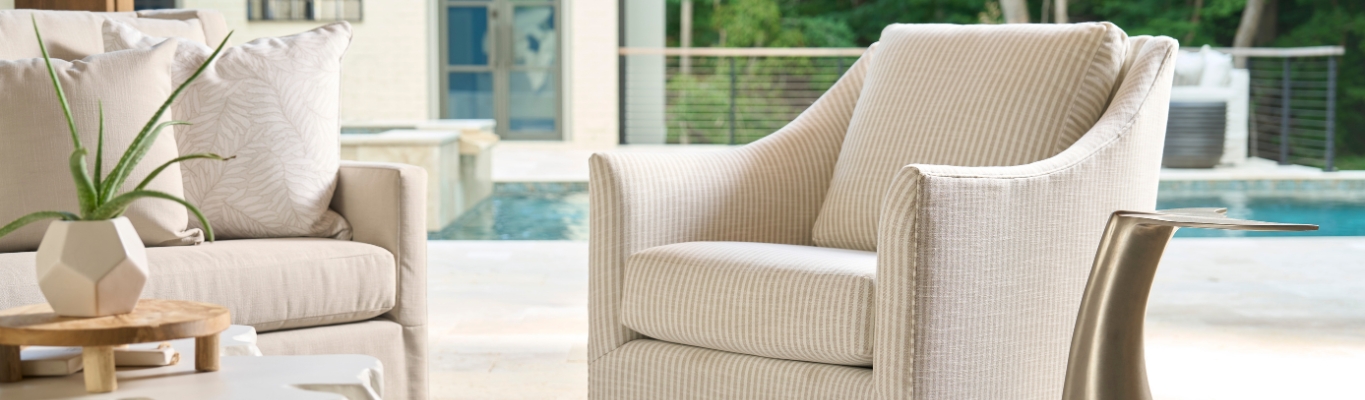
The frame gets most of the attention when shopping for outdoor furniture, but the fabric and cushion technology often determine how the furniture actually feels and performs day to day. In Florida’s climate, standard upholstery fabrics break down rapidly. UV rays cause fading and fiber degradation, humidity promotes mold growth, and frequent rain saturates cushions that were not designed for outdoor use. Performance fabrics solve these problems through engineering rather than surface treatments.
Sunbrella has become the industry benchmark for outdoor performance fabric, and for good reason. Unlike traditional fabrics that are dyed after weaving, Sunbrella uses a solution-dyed acrylic process in which each fiber is saturated with color and UV-stabilized pigments before being spun into yarn (Sunbrella). This means the color goes all the way through the fiber rather than sitting on the surface. The result is a fabric that resists fading even under constant Florida sun exposure, maintains its strength through repeated cleaning, and does not rely on a topical finish that can wear off over time.
Sunbrella fabrics carry the Skin Cancer Foundation’s seal of approval for UV protection, meeting testing criteria that include an ultraviolet protection factor (UPF) of 30 or higher. The manufacturer backs upholstery fabrics with a 5-year limited warranty against loss of strength or color, while shade and marine-grade Sunbrella fabrics carry a 10-year warranty. For Tampa Bay homeowners, these warranties provide tangible assurance that the investment in performance fabric will hold up through Florida’s most demanding seasons.
High-performance cushion cores are as vital as the fabric. Quick-dry foam cores prevent mold by draining water in minutes, unlike traditional foam, which holds moisture for days. Paired with Sunbrella covers, this system withstands Florida weather without constant maintenance.
Engineered rope materials used in woven furniture also resist stretching, sagging, and UV damage. This ensures the woven patterns on Matter Brothers’ pieces remain taut and attractive over time, maintaining their look season after season.
Sunbrella UV Protection Performance for Outdoor Furniture
According to Sunbrella’s published fabric specifications, their solution-dyed acrylic fabrics have demonstrated up to 98% UV protection in testing conducted under standards including AATCC 183 and ASTM G154. Sunbrella fabrics also carry the Skin Cancer Foundation’s seal of approval, meeting the requirements for a UPF rating of 30 or higher for safe, effective UV protection.
The Color to the Core manufacturing process saturates each fiber with UV-stabilized pigments before the yarn is spun, producing inherent fade resistance that does not depend on surface coatings. Sunbrella upholstery fabrics carry a 5-year limited warranty, while marine and shade fabrics are backed by a 10-year limited warranty against color loss and strength degradation from normal use and sun exposure.
Key Takeaway: Sunbrella’s solution-dyed acrylic technology delivers up to 98% UV protection with color engineered into the fiber core, providing homeowners with documented, warranty-backed fabric performance designed for constant subtropical sun exposure.
Outdoor Furniture Trends for Tampa Bay 2026: Modular Design, Sustainability & Smart Features
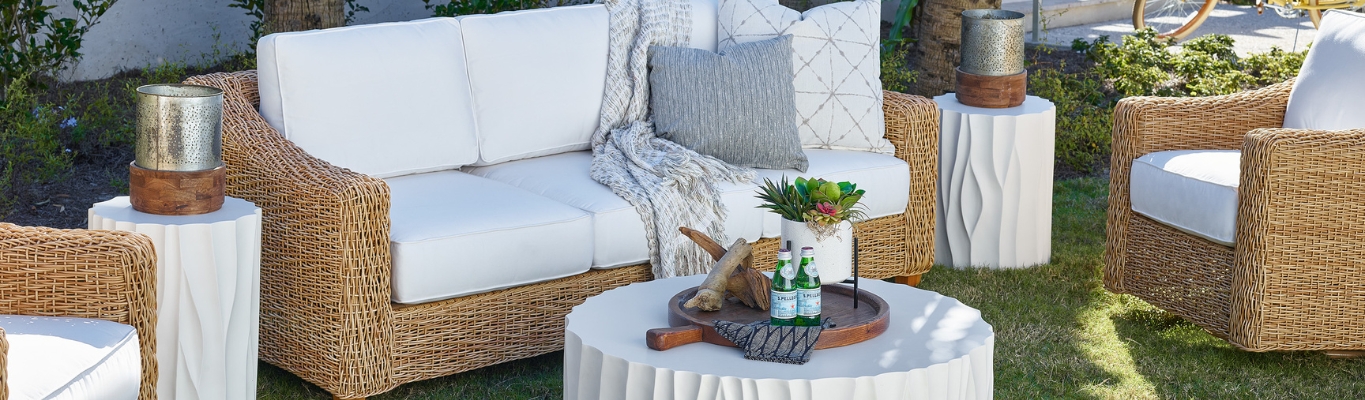
The outdoor furniture market is shifting in 2026, and several emerging trends align particularly well with how homeowners use their outdoor spaces. Three developments stand out: modular and reconfigurable design, sustainable materials and manufacturing, and the quiet integration of smart technology into outdoor living.
Modular outdoor furniture is dominating design conversations this year. The traditional approach of purchasing a fixed 7-piece dining set or a single L-shaped sectional is giving way to individual pieces that work together but can be separated and rearranged. This flexibility is especially valuable in Florida, where outdoor spaces need to adapt to different weather scenarios, group sizes, and seasonal uses. A configuration that works for Sunday dinner can be pulled apart for Monday morning coffee without looking incomplete. The approach also makes storm preparation easier, since smaller, individual components are easier to move under cover than a large, fixed sectional.
Sustainability has moved from a niche selling point to a mainstream expectation. Tampa Bay homeowners are increasingly seeking outdoor furniture made from responsibly sourced materials. FSC-certified teak, which the Forest Stewardship Council verifies comes from forests managed with environmental, social, and economic responsibility, is one of the most visible examples. Recycled HDPE (high-density polyethylene) is another strong option. Powder-coated metal frames with low-VOC finishes round out the sustainable material options, offering corrosion protection without the environmental concerns of traditional coating processes.
Smart outdoor features in 2026 are subtle, focusing on integrated convenience rather than flashy gadgets. Trends include built-in USB/wireless charging, solar-powered LED lighting in umbrellas and pergolas, and automated canopies. These additions offer meaningful daily convenience for Tampa Bay homeowners without compromising aesthetics.
Design-wise, mixed materials are key. Trending combinations involve light natural wood with matte black metal, woven rope with concrete, and teak with powder-coated aluminum. This approach prioritizes contrast, texture, and practicality, allowing designers to optimize each component—for instance, pairing a teak tabletop with a corrosion-resistant aluminum base.
Caring for Your Outdoor Furniture: Maintenance Tips for Florida’s Humidity and Sun
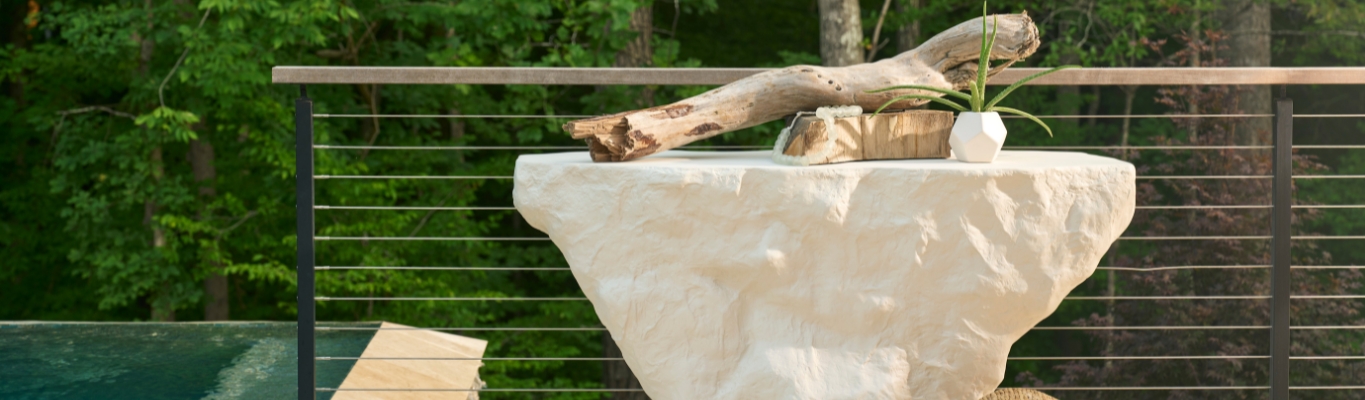
Premium outdoor furniture is built to handle Florida’s climate, but routine care extends its life and keeps it looking its best. The good news is that maintenance for quality pieces is far simpler than most people expect. The specific approach depends on the material, but the overall theme is consistent: a little regular attention prevents the need for major restoration work later.
Aluminum: Powder-coated aluminum is one of the lowest-maintenance outdoor materials available. A simple wipe-down with mild soap and water every few weeks removes pollen, dust, and salt residue. Avoid abrasive cleaners or steel wool, which can scratch the powder coating and compromise its protective qualities. If you notice any chips in the coating, touch them up promptly to prevent moisture from reaching the bare metal underneath. In coastal areas with heavy salt exposure, rinsing frames with fresh water after storms helps prevent buildup.
Teak: For honey-gold color, apply teak sealer annually. For silver-gray, little maintenance is needed. Annual cleaning with a soft brush and mild soapy water removes surface dirt; avoid pressure washing.
Resin Wicker: Clean easily with a hose and soft cloth, or mild dish soap for stubborn dirt. Quick-drying and rarely molds; regular rinsing prevents dirt buildup in the weave.
Performance Fabrics and Cushions: Clean with mild soap and water. Use a diluted bleach solution for tough stains. Brush off debris regularly. Store cushions vertically when not in use for extended periods to drain moisture.
Hurricane Season Preparation: Bring lightweight aluminum pieces indoors. Heavier teak/concrete can stay, but move them to a sheltered corner. Store all cushions, umbrellas, and loose accessories inside. Preparing saves on potential damage costs.
Shopping at Matter Brothers Furniture: Outdoor Collections, Delivery, and Expert Guidance
Photos can only tell you so much. The weight of a teak table, the texture of a woven rope frame, and the feel of a quick-dry cushion are best experienced in person. Visit any of our Matter Brothers Furniture showrooms in Pinellas Park, Tarpon Springs, Fort Myers, Naples, or Sarasota to see our Florida-curated outdoor collections styled in real room settings.
Every outdoor piece we carry is selected with this climate in mind, from powder-coated aluminum frames to performance fabric cushions. For larger projects, our complimentary design services team can help you plan layouts, coordinate materials, and make confident decisions that fit your space and budget.
Looking beyond the patio? Our Luxury Furniture Shopping Guide for Tampa Bay covers the same level of detail across bedroom, living room, and dining collections.
Frequently Asked Questions About Outdoor Furniture in Florida
What is the best material for outdoor furniture in Florida?
Powder-coated aluminum and teak are top choices. Aluminum is rust-resistant, lightweight, and low-maintenance at a moderate price. Teak offers superior natural durability (25-50 years) but costs more. Resin wicker (HDPE) over aluminum is a weather-resistant middle ground. For best results, use furniture combining multiple weather-resistant materials.
How long does outdoor furniture last in Florida’s climate?
Lifespan varies significantly. Untreated steel/basic plastic furniture lasts 2-4 years. Premium powder-coated aluminum lasts 10-15 years. Quality teak can last 25-50 years. Resin wicker (HDPE) generally lasts 15-20+ years. Longevity depends on material quality, UV exposure, and routine maintenance (cleaning, seasonal cushion storage).
Is Sunbrella fabric worth the extra cost for outdoor cushions?
Yes, it is highly justifiable. The solution-dyed acrylic provides up to 98% UV protection and resists color fading far better than standard polyester, which may fade in one Florida summer. Sunbrella offers a 5-year warranty (10 years for marine/shade grades), making it the more cost-effective choice in the long term due to superior color retention and mold resistance.
How should I protect outdoor furniture during hurricane season?
Before a storm, bring in cushions, umbrellas, and loose items. Store lightweight furniture (aluminum/wicker) in a garage, shed, or lanai. Move heavy pieces (teak/concrete) against a solid wall or into a sheltered corner and anchor them if possible. After the storm, rinse all furniture with fresh water to remove salt/debris and let it dry completely.
Where can I shop for luxury outdoor furniture in Tampa Bay?
Matter Brothers Furniture has showrooms in Pinellas Park and Tarpon Springs, plus locations in Fort Myers, Naples, and Sarasota. They display premium, Florida-specific outdoor collections and offer free design services. Collections can be viewed online or in-store.